The Internet Behind the Internet
Every product we buy comes with information. Food has ingredients. Medicine has warnings. Cars come with owner’s manuals. Yet the internet doesn’t.
Billions of people use it every day without understanding how it works or why it behaves the way it does. Project Nebra talks about The Internet Behind the Internet, and lifts the veil on the hidden systems shaping our attention, our choices, and the digital world around us.
The Need To Take Back Control

The Attention Crisis
The average person now spends over 6 hours a day online, checking their phone dozens to hundreds of times daily. More than 5 billion people use social media worldwide, while the average user spends over 2 hours a day scrolling through platforms engineered to maximise engagement. Every notification, recommendation and infinite scroll competes for one thing: our attention.

The Human Cost
Research increasingly links problematic social media use with anxiety, depression, poor sleep, body image concerns, eating disorders, ADHD symptoms, obsessive-compulsive symptoms, loneliness, reduced wellbeing, digital eye strain and sedentary lifestyles. The WHO reports that 1 in 9 adolescents now shows signs of problematic social media use, while 12% are at risk of problematic gaming, highlighting a growing public health concern.
What We Do
The User Manual No One Ever Gave You.
Project Nebra isn’t about abandoning technology. It’s about understanding it.
Drawing on years of experience in digital marketing, Project Nebra reveals the hidden systems shaping our online experiences, giving audiences the knowledge to make more informed decisions about how they use the digital world.

Signature Sessions For A Changing Digital World
Each session is thoughtfully designed around its audience, creating a tailored experience that connects digital transformation with real human behaviour. Delivered in 60 minutes or less, these highly interactive keynote experiences combine storytelling, practical insights, and meaningful audience engagement to create moments of reflection, discovery, and action.
Every session is designed to leave audiences with a deeper understanding of the digital world, a sharper awareness of their own relationship with technology, and a renewed perspective on how they can adapt, grow, and thrive in an increasingly connected future.

Organisations & Leaders
Helping businesses understand technology, AI, productivity, and the future of work.

Students & Future Professionals
Preparing young people with the digital skills, mindset, and awareness needed for tomorrow’s world.

Rising Professionals
Helping ambitious professionals improve productivity, adapt to change, and stay ahead in a fast-moving workplace.
Parents & Educators
Helping adults understand children’s digital lives and create healthier relationships with technology.
What Your Audience Will Take Away
Every audience leaves with a clearer understanding of how today’s digital world is designed to capture attention, influence behaviour, and shape everyday decisions. Rather than encouraging people to disconnect from technology, the session equips them with practical knowledge and realistic strategies to use it more intentionally.
Students gain a better understanding of how social media platforms, games and online services compete for their attention. They leave with greater awareness of the habits that shape their online behaviour, practical ways to improve focus and concentration, and the confidence to make more intentional digital choices without feeling disconnected from the technology they enjoy.
Parents develop a clearer understanding of the digital environments their children are growing up in, enabling more informed and constructive conversations about technology. Rather than relying solely on restrictions, they leave with practical approaches that encourage healthier digital habits, reduce conflict around devices, and help build trust within the family.
Employees discover how constant notifications, multitasking and digital distractions affect productivity, decision-making and wellbeing. They leave with practical techniques to manage attention more effectively, improve focus throughout the working day, and develop healthier relationships with the digital tools they rely on.
Leaders gain valuable insight into how digital behaviours influence workplace culture, employee wellbeing and organisational performance. The session provides a framework for recognising the impact of attention overload, supporting healthier digital practices, and fostering environments where people can work with greater focus, balance and intention.

Meet Your Speaker
For nearly two decades, Danish Pervez has helped organisations understand, adapt to and thrive in an increasingly digital world.
A digital marketing strategist, keynote speaker, trainer and author, he has spent his career working behind the scenes of the internet, helping businesses navigate digital transformation, optimise digital experiences, and better understand the technologies shaping modern life.
Through Project Nebra, he now shares that insider perspective with schools, universities, organisations and communities, helping audiences understand not just how to use the internet, but how the internet works.
Experience & Credentials
Experience
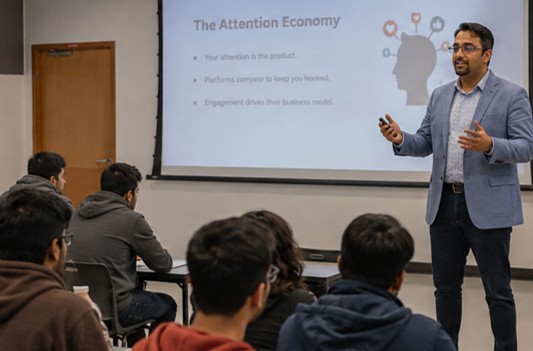
For nearly two decades, Danish Pervez has helped organisations navigate digital marketing, technology and customer behaviour, driving meaningful digital change across industries.
Perspective
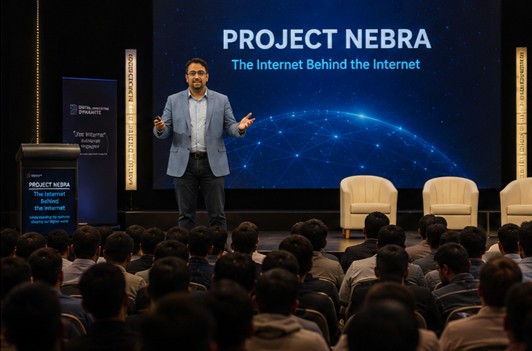
Having delivered hundreds of workshops and speaking engagements across the GCC, he brings practical insight shaped by years of digital transformation and organisational change.
Purpose
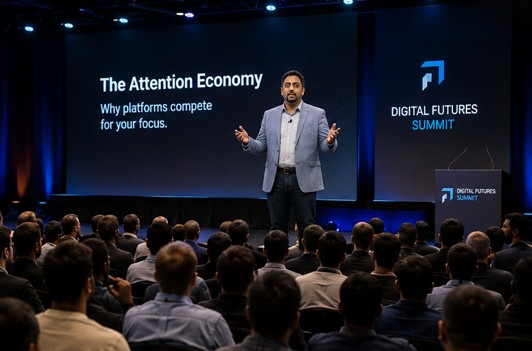
Through Project Nebra, Danish reveals how the modern internet works, giving audiences the knowledge to use technology with greater confidence, awareness and intention.
How the Session Works
The Internet Behind the Internet is a structured, interactive session designed to be accessible, engaging, and relevant across all audiences.
Duration: Typically 45–90 minutes, depending on audience and format.
1. The Attention Economy
How the internet makes decisions about what you see, and why your attention has become the product.
2. The Hidden Systems
A behind-the-scenes look at algorithms, engagement design, notifications, and recommendation engines.
3. The Psychology of Scrolling
Why platforms feel addictive, and how design influences behaviour without most people noticing.
4. The Human Impact
The real effects on focus, habits, wellbeing, communication, and daily life.
What audiences walk away with:
Practical, realistic ways to use technology more intentionally without disconnecting from it. A clear understanding of how modern digital platforms are built, how they influence behaviour, and how to make more conscious choices in a connected world.
Who This Is For
This session is designed for anyone navigating the modern digital world — whether personally, professionally, or educationally.
It is particularly relevant for:
- Schools and educational institutions
- Parents and parent groups
- Universities and students
- Corporate teams and organisations
- HR, wellbeing, and leadership departments
- Government and public sector bodies
- Conferences focused on technology, education, or wellbeing
If your audience uses smartphones, social media, email, or digital tools in daily life, this session is relevant.
It is not about removing technology — it is about understanding it well enough to use it more intentionally.

Why Project Nebra
Project Nebra takes its name from the Nebra Sky Disk — one of the oldest known depictions of the cosmos, discovered in Germany and believed to be over 3,600 years old.
The disk does not explain the universe. It represents it. A layered attempt to map something vast, complex, and partially hidden — using the limited tools of its time. The modern internet functions in a similar way. Billions of interactions, decisions, and signals are constantly shaping what each person sees, yet the underlying structure remains largely invisible to the user.
Project Nebra exists because that structure has become too influential to remain unexplained. It is not an attempt to slow technology down or remove it from daily life. It is an attempt to restore balance between those who build digital systems and those who live inside them.
By making the mechanics of the modern internet more visible, we believe people are better equipped to navigate it intentionally, critically, and with greater autonomy.

What Happens Before You Scroll
Most of us no longer reach for our phones because we have something specific to do. We reach for them because we’ve run out of things to think about. A spare moment, a queue, a lift, a television advert, and almost instinctively our thumb begins to scroll, searching for something without knowing exactly what. We choose our food, our clothes, our cars and even our coffee based on our own needs and preferences.
Yet when we unlock our phones, we rarely choose what comes next. The content, the features, the notifications and even the way we communicate evolve through decisions made by designers, marketers and algorithms long before they reach our screens.
The Internet Behind the Internet explores those invisible decisions, helping you understand not just what you’re consuming, but how those choices came to be made for you.
Talk To Us To Learn More
Drop us a message to get started!

